

Emergency Thermal Management Disaster Recovery for Insurance Provider
When data centre climate systems fail, mission-critical hardware faces catastrophic risk within minutes. High-density server racks generate intense heat. If left unmitigated, triggers automatic thermal shutdowns, corrupts data, and destroys expensive physical infrastructure.
This technical case study details our rapid deployment of emergency thermal management disaster recovery protocols. It demonstrates how our specialized engineering team stabilized a severely compromised financial data centre, deployed temporary spot-cooling infrastructure under extreme pressure, and protected critical systems without a single second of operational downtime.
About Our Client
Our client is a tier-one Malaysian insurance provider serving millions of policyholders nationwide. Their operations rely heavily on a centralized, high-availability data centre environment.
This facility powers:
Due to their critical position in the financial sector, the client operates under stringent regulatory oversight. Any prolonged infrastructure failure directly impacts public financial services across Malaysia.
Challenge: Sudden PAC Failure & RMiT Compliance Risks
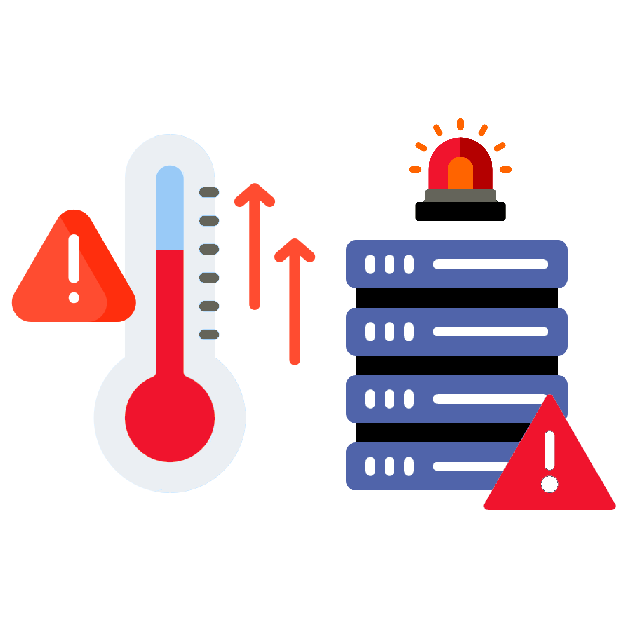
The data centre relies on a redundant Precision Air Conditioning (PAC) network to maintain a strict ambient temperature of 21°C (±1°C) and relative humidity levels between 45% and 55%.
During a standard operational cycle, the primary PAC system suffered a catastrophic component failure. The cooling loop collapsed, causing ambient temperatures in the hot-aisle containment zones to spike toward a critical 38°C within minutes.
This sudden thermal surge created two distinct threats:
Hardware Thermal Shutdown
Modern server architecture utilizes internal thermal sensors that trigger automatic, hard shutdowns when CPU core temperatures cross critical safety thresholds (typically between 35°C and 40°C ambient room temperature). A hard shutdown during live database transactions risks severe data corruption and hardware degradation.
BNM RMiT Violations
As a financial institution, our client is legally bound by the Bank Negara Malaysia (BNM) Risk Management in Technology (RMiT) framework. The RMiT guidelines mandate strict limits on maximum tolerable downtime (MTD) and service availability. Crossing these thresholds triggers mandatory, high-priority incident reporting to BNM, audits, potential financial penalties, and severe brand damage.
Solution: Rapid Thermal Crisis Intervention
Our team initiated Rapid Crisis Intervention upon receiving the critical alert from the client’s facility manager, immediately deploying Thermal Management Disaster Recovery protocols to de-escalate the emergency.
Phase 1: Rapid 60-Minutes Mobilization & On-Site Arrival
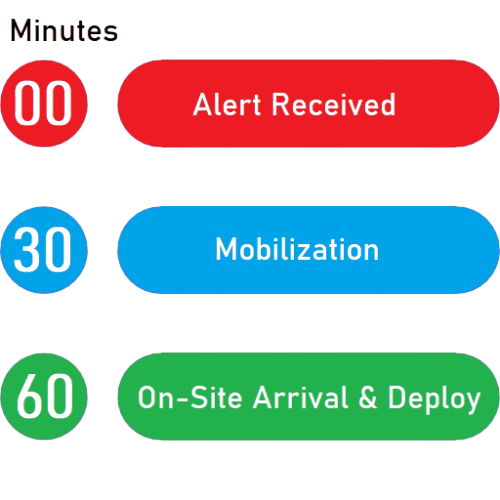
Our emergency response unit initiated an immediate, dual-stage deployment to secure the facility, driven by our proprietary, military-disciplined T-30 Response Protocol:
Phase 2: Immediate Stabilization with Industrial Spot-Coolers
Before troubleshooting the primary cooling infrastructure, the team prioritized immediate localized stabilization to protect the highest-risk server racks.
This temporary thermal barrier successfully dropped the immediate intake temperatures down to a safe 24°C, preventing the servers from crossing the automatic shutdown threshold.
Phase 3: Root-Cause Diagnosis and Expert Repair
With the immediate thermal threat stabilized, our senior HVAC engineers performed a comprehensive diagnostic assessment of the failed primary PAC system. The team identified two concurrent points of failure:
Our technicians isolated the cracked joint, performed precision brazing to seal the leak, replaced the faulty compressor relay with an OEM-spec component, and recharged the system with the precise weight of refrigerant required.
Phase 4: IoT Monitoring Integration & Thermal Equilibrium
To ensure system stability during the post-repair restart, our team integrated temporary, high-precision wireless IoT thermal sensors across the server aisles. These sensors provided real-time, minute-by-minute temperature and humidity telemetry to our central dashboard. We monitored the environment continuously until the room reached a perfect thermal equilibrium of 21°C.
Technologies and Tools Deployed
The emergency response utilized high-capacity portable spot-coolers for immediate stabilization alongside wireless IoT thermal sensors and FLIR thermal imaging for real-time monitoring and diagnosis. Backed by our specialized Data Centre and Disaster Recovery Consultancy team, technicians executed the repairs using digital manifold gauges to resolve the failed compressor relay and refrigerant leak, successfully restoring the facility to its safe baseline temperature.
Outcome and Result: Zero Downtime & Total Regulatory Protection
Our rapid-response emergency engineering intervention delivered flawless results under intense operational pressure:
100% Infrastructure Uptime
Ambient temperatures were brought under control before any server triggered a thermal safety shutdown. Core financial services, digital portals, and claims systems experienced zero latency or interruption.
Full BNM RMiT Compliance
Due to service availability remained completely uninterrupted, the client successfully stayed within all regulatory metrics. They avoided mandatory emergency incident reporting, regulatory audits, and compliance penalties.
Brand and Reputation Safeguarded
The entire thermal crisis and recovery operation remained completely invisible to the public and policyholders. The client successfully preserved their market reputation for digital reliability and operational continuity.
FAQ
Frequently Asked Questions
Protect Your Infrastructure Before a Crisis Hits
An unexpected cooling failure can cost your business millions in regulatory fines, critical hardware damage, and lost customer trust. Do not wait for an operational emergency to test your disaster recovery protocols; instead, take proactive steps today to secure your digital infrastructure. Our expert engineering team is ready to safeguard your mission-critical facilities with targeted solutions: